Betting Psychology, Discipline and Process
One of the biggest reasons punters lose money is not poor information but poor behaviour. Betting psychology affects how people handle losses, chase action, react to variance, and judge whether their decisions were actually good. This category covers the mental and practical side of betting, including discipline, bias, emotional control, and structured review.
Common Betting Biases
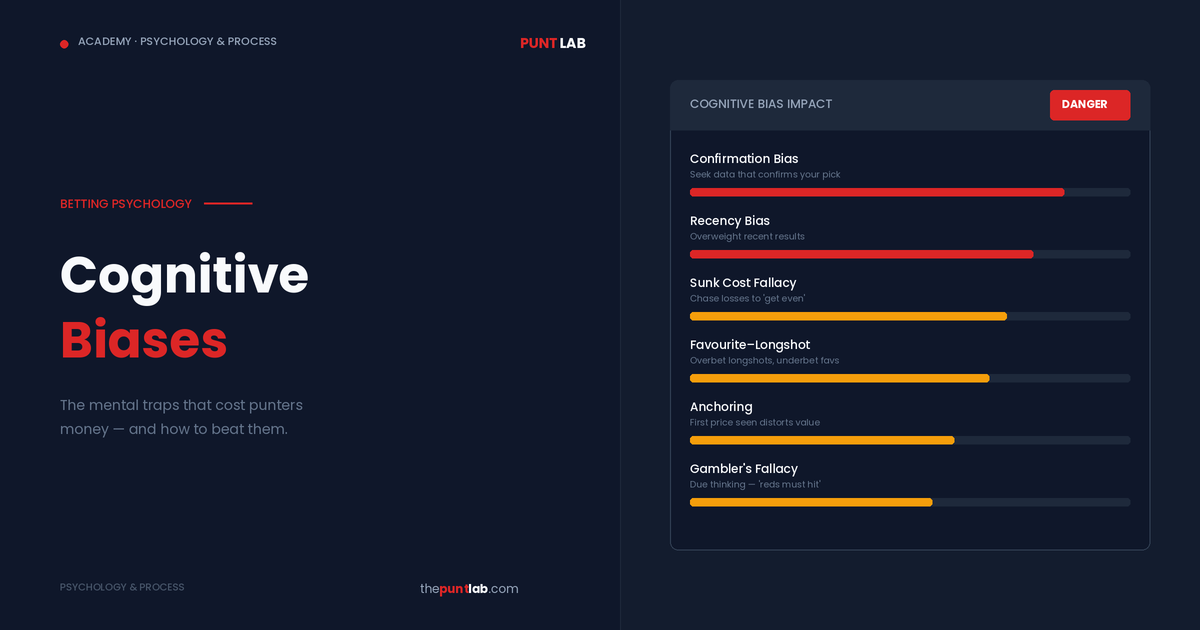
Betting decisions are often distorted by cognitive bias. Recency bias makes recent results feel more important than they really are. Confirmation bias makes punters focus only on information that supports their view. Outcome bias makes people judge a bet by whether it won rather than whether it was good value. Our guide to cognitive biases that cost punters money breaks down the most common traps.
Why Emotional Betting Is Dangerous
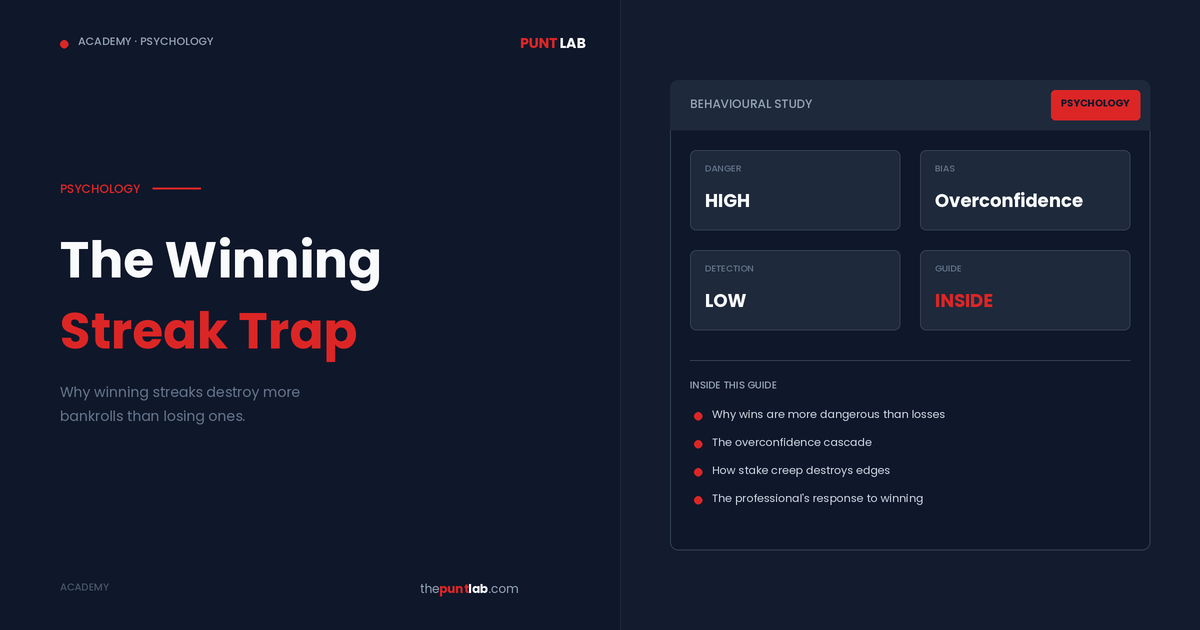
Emotional betting usually shows up as chasing losses, over-betting after a bad run, or increasing stake size based on confidence rather than price. These habits damage bankrolls quickly. A disciplined punter follows a process and a staking plan whether the last five bets won or lost. Emotional reactions are normal, but betting decisions should not be made from them.
How to Build a Better Betting Process
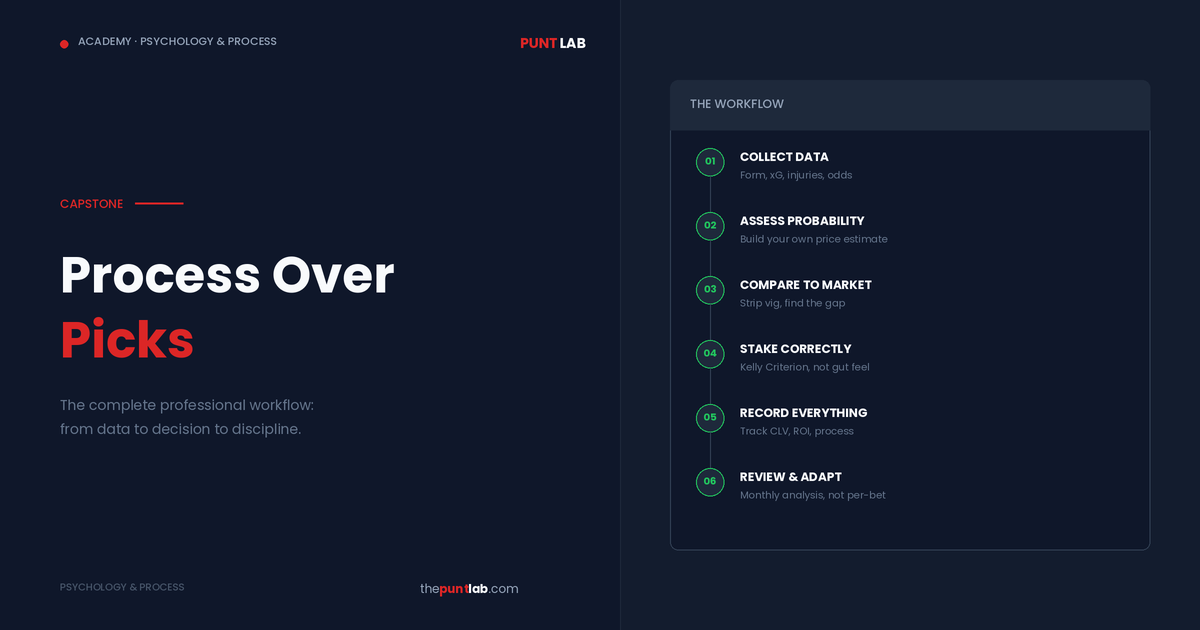
A strong betting process is repeatable. It usually includes research, price comparison, decision-making, staking, record keeping, and review. Having a clear workflow helps reduce impulsive betting and makes it easier to improve over time. The goal is not to eliminate variance. The goal is to make better decisions more consistently.
Why Bet Tracking Matters
If you do not record your bets properly, it is very easy to misjudge your own performance. Bet tracking helps you see which sports, markets, and bet types are actually working. It also stops memory from flattering your results. Simple tracking of date, selection, odds, stake, result, and closing price can tell you far more than gut feel ever will.
Related Categories
For bankroll rules and staking frameworks, visit Strategy & Math. For applying disciplined betting to real sports and markets, explore Football Analytics, NRL Betting, AFL Betting, and Racing Theory.