Horse Racing Form Analysis and Betting Theory
Horse racing betting is built on form analysis. To find value, punters need to understand how to read horse racing form, assess class, map speed, interpret sectional times, and judge how track conditions affect performance. This category focuses on the core ideas behind serious racing analysis, from pre-race assessment through to price evaluation.
How to Read Horse Racing Form
Reading horse racing form means going beyond finishing position. A horse may have run fifth on paper but performed well in a race shape that did not suit. You need to look at class, distance, tempo, barrier, track pattern, weight carried, and how the run unfolded. Strong form analysis is about context, not just results.
Speed Maps and Race Shape
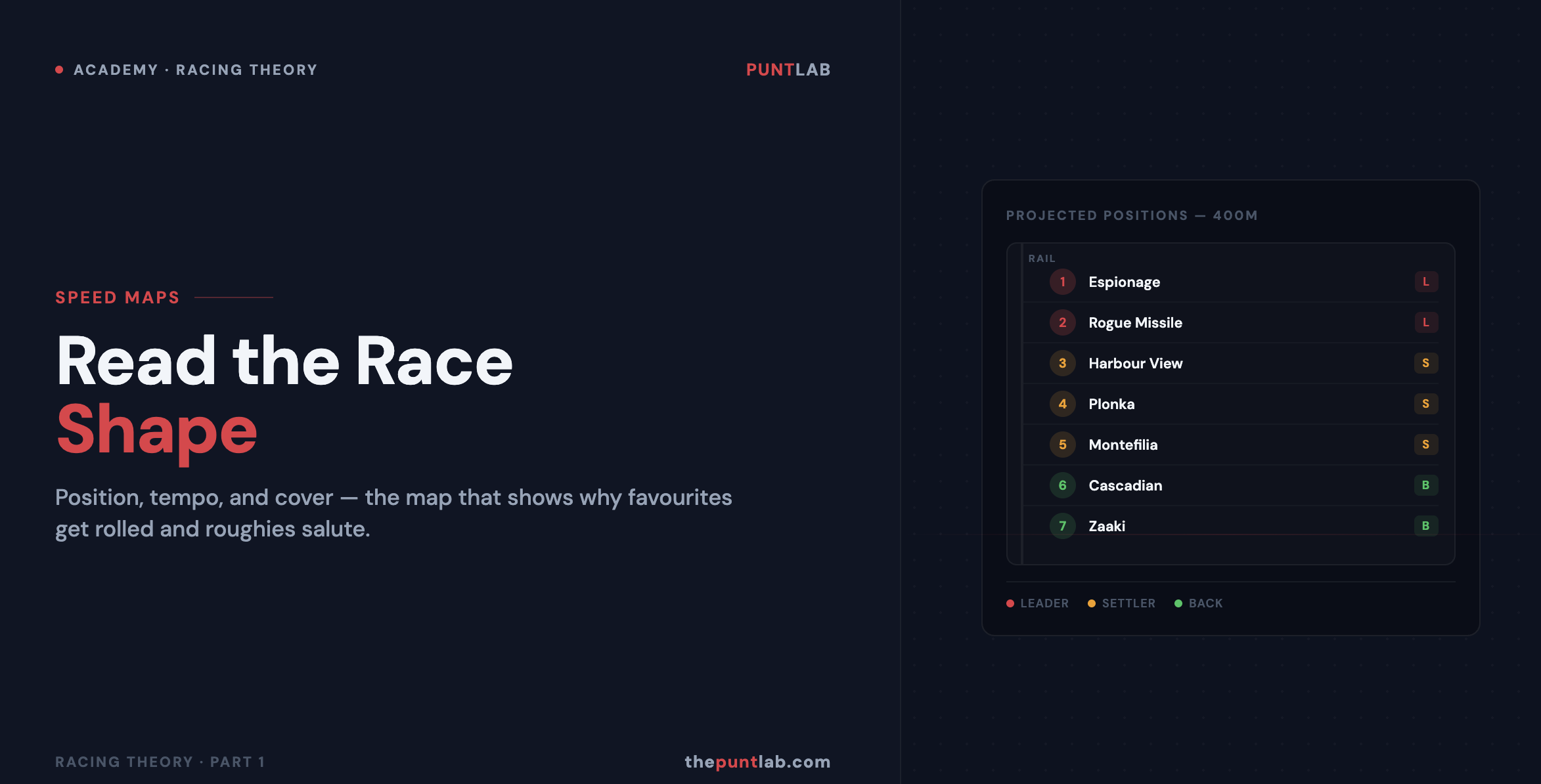
A speed map is a prediction of where each horse is likely to settle in the run. This matters because race shape often determines which runners get the best chance. Leaders can control slowly run races, while backmarkers usually need genuine tempo to bring their finishing speed into play. Our guide to speed maps explains how to think about pace and positioning more clearly.
Sectional Times Explained
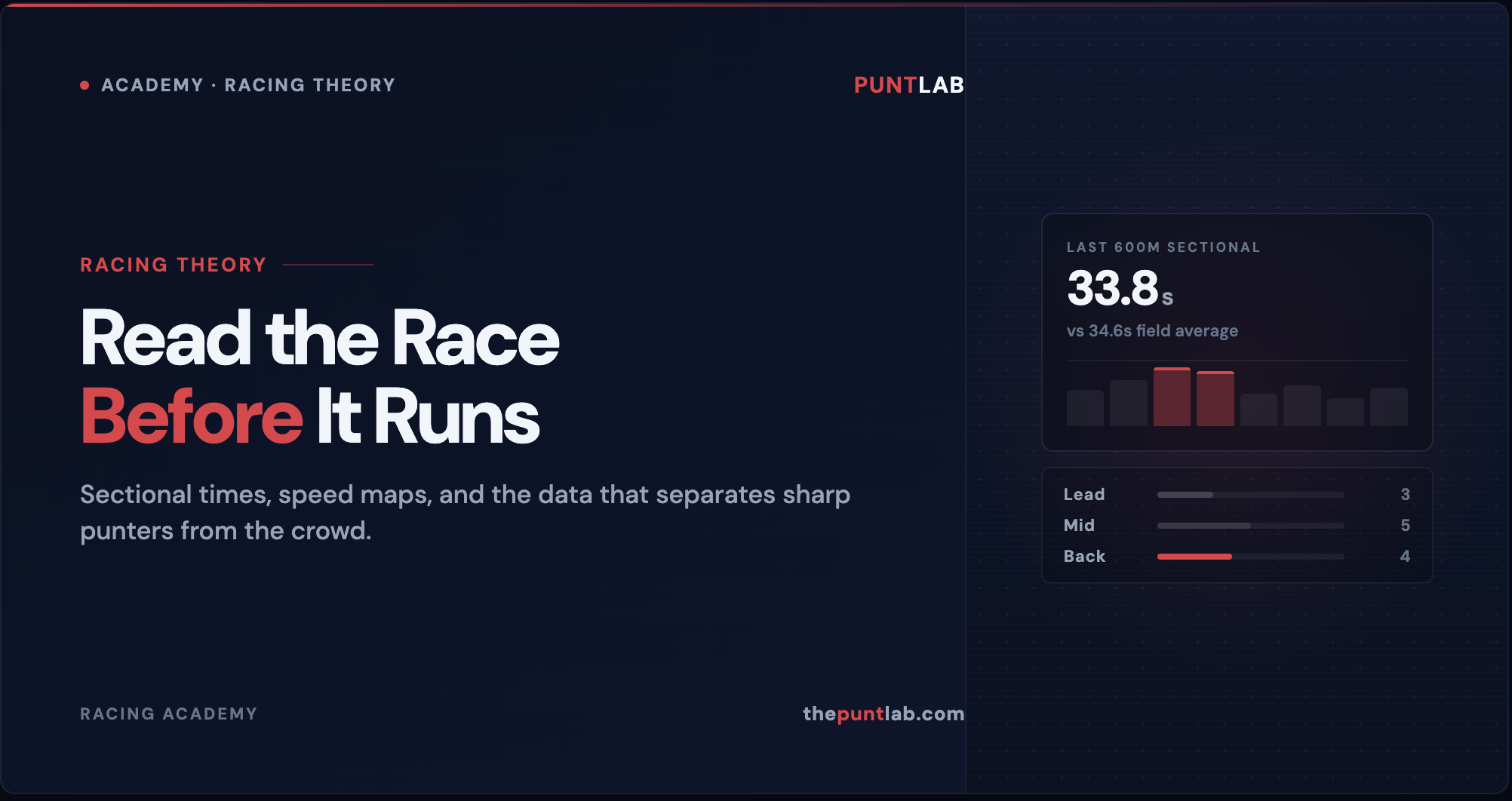
Sectional times help punters see how fast a horse actually ran at different stages of the race. They are especially useful for identifying hidden runs, flattering runs, and horses that were suited or unsuited by tempo. A fast late split in a genuinely run race usually means more than a flashy finish in a slowly run event.
Track Conditions and Class Assessment
Track conditions can change everything in horse racing. Some runners improve sharply on wet ground, while others are far less effective once the surface softens. Class is just as important. A horse dropping from a stronger metro race into weaker company can be much better placed, even if its recent finishing positions look plain. Good punters constantly compare the quality of opposition, not just the labels on the race.
Where to Go Next
Once you understand racing form and race shape, the next step is pricing races properly and staking with discipline. Visit Strategy & Math for bankroll and value concepts, and Psychology & Process for the habits that help punters stay consistent through inevitable losing runs.