AFL Betting Guide and Analysis Basics
AFL betting is a different challenge to most other sports because scoring is high, momentum swings are common, and conditions can change the shape of a game quickly. To bet on AFL well, punters need to understand line markets, team style, venue effects, player roles, and how matchups influence disposal counts, clearances, and scoring patterns. This category covers the basics of smarter AFL betting analysis.
How AFL Line Betting Works
AFL line betting is one of the main markets for serious punters. Rather than just backing a team to win, you are betting on whether they can win by more than the posted margin or stay within it as the underdog. Because AFL can produce both close finishes and major blowouts, line assessment requires more than recent scores. Venue, matchup, injuries, and game style all matter.
Important AFL Stats for Betting
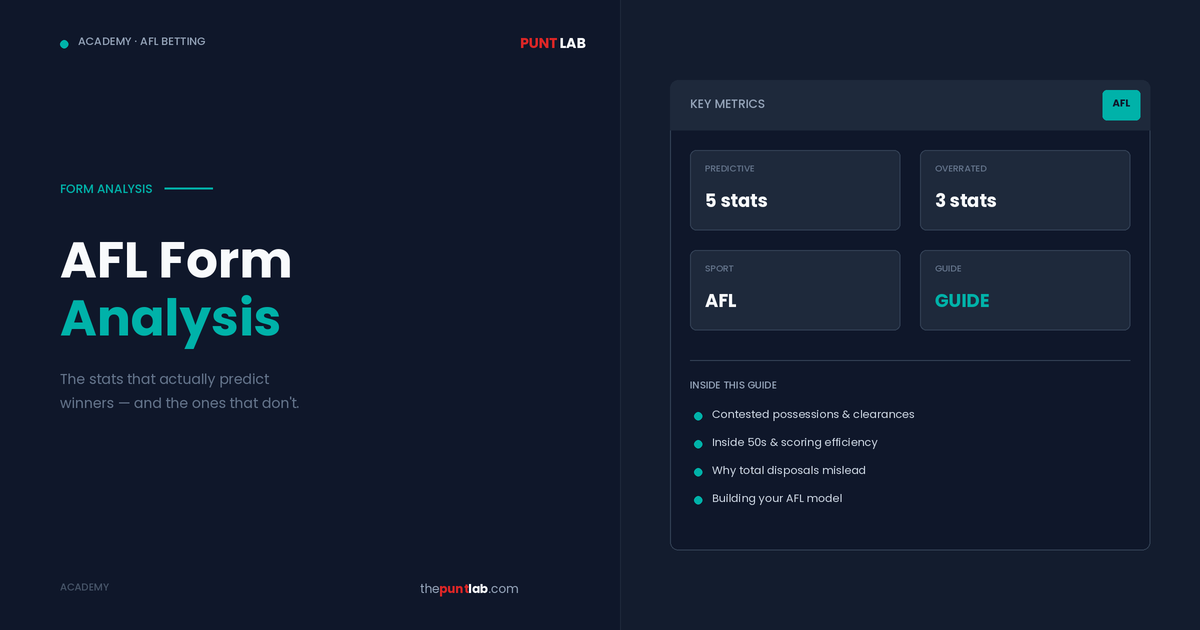
Useful AFL stats include contested possessions, clearances, inside 50s, turnover differential, disposal efficiency, and marks inside 50. These numbers help explain how a team wins territory, creates scoring chances, and handles pressure. Looking only at the final margin often misses what actually happened in the game.
Player Props and Disposal Markets
AFL player prop markets, especially disposal markets, have become more popular with punters. These can offer value when there are role changes, injuries, likely tags, or game-state setups that the market has not fully priced in. A midfielder pushed to half-forward, for example, may see fewer touches even if their season average looks strong on paper.
Why Venue and Weather Matter in AFL
Venue is a major factor in AFL betting. Some grounds produce stronger home-ground edges than others, and certain teams are clearly better suited to specific conditions or dimensions. Weather also matters. Wind and rain can reduce scoring, increase stoppages, and change which types of players and teams are favoured. Any serious AFL betting preview should consider both venue effects and forecast conditions.
Where to Go Next
If you are new to betting, begin with Betting Basics. For bankroll strategy, expected value, and staking plans, head to Strategy & Math. For decision-making discipline and emotional control during the season, visit Psychology & Process.