Most punters live in 1X2 because it feels simple. Home. Draw. Away. The problem is the draw is not a neutral option — it’s the bookie’s favourite weapon. It sits in the middle soaking up margin, killing multis, and forcing you to take worse prices on teams you’re confident will win.
Asian Handicap strips that weapon away. It also gives you something 1X2 can’t: control. You can shape the bet around how you think the match will play, not just who lifts their arms at full time.
TL;DR rule: If you’re backing a better team at a short 1X2 price, Asian Handicap usually gives you a cleaner bet and less “draw pain”.
Why the draw is a tax on punters
Here’s the dirty secret with 1X2: even when you’re “right”, the draw can make you wrong.
Say you like a favourite. You think they’re a class above. You’re not really worried about them losing. You’re worried about them not getting the job done — dominating territory, missing chances, and finishing 1–1.
In 1X2, that’s a loss. The draw is treated like the underdog winning. That’s brutal.
Bookmakers love it because it:
- creates an extra bucket to price (more room to hide margin)
- drags down the value of the two outcomes punters actually want
- turns a “should win” scenario into a losing ticket
Asian Handicap is built to solve this. It doesn’t magically make you win more bets. It makes your bets match your thinking.
If your read is “Team A is better, they should win, and if it’s a draw I’m not interested in being punished like they lost,” you’re describing Asian Handicap without knowing it.
The only lines you actually need to understand
People overcomplicate handicaps with charts and “quarter ball” maths. You don’t need that. You need a few lines nailed and you’re good.
Here are the core ones you’ll use 95% of the time:
Asian Handicap -0.5
This is basically “win the match”. No draw option.
- If your team wins: you win
- If it’s a draw or loss: you lose
It’s the clean alternative to backing them in 1X2, often at a better price.
Asian Handicap -1.0
This adds a safety net.
- Win by 2+: you win
- Win by exactly 1: push (stake refunded)
- Draw or loss: you lose
This is perfect when you think the favourite wins but might not blow them away.
Asian Handicap +1.0
This is the underdog protection line.
- Underdog wins or draws: you win
- Underdog loses by exactly 1: push
- Underdog loses by 2+: you lose
This is how sharps bet ugly underdogs that are competitive but may still lose narrowly.
Now the “quarter lines” that scare everyone:
Asian Handicap +0.25 (aka +0.0/+0.5 split)
Half your stake is on 0 (draw no bet), half on +0.5.
- If your team wins: you win full
- If it draws: you win half (the +0.5 wins, the 0 pushes)
- If it loses: you lose full
This is a great line when you think the team won’t lose, but you want some draw upside.
Asian Handicap -0.25 (aka -0.0/-0.5 split)
Half your stake is on 0, half on -0.5.
- If your team wins: you win full
- If it draws: you lose half (the -0.5 loses, the 0 pushes)
- If it loses: you lose full
This is a sharp “favourite but tight game” line.
That’s it. If you can understand those, you can handicap almost any match like a pro.
Why sharps prefer it (and where the value comes from)
Sharps aren’t betting handicaps because it sounds fancy. They do it because the market behaves differently.
1X2 is public. It’s emotional. It’s brand-driven. Big clubs get backed because people love them, not because the price is right. That creates soft numbers.
Asian Handicap is more “pro money” because:
- it’s less popular with casuals
- prices are tighter and more efficient
- you can target specific match scripts
- you can reduce the draw’s randomness
Here’s the practical edge: you can stop paying premium prices for the same opinion.
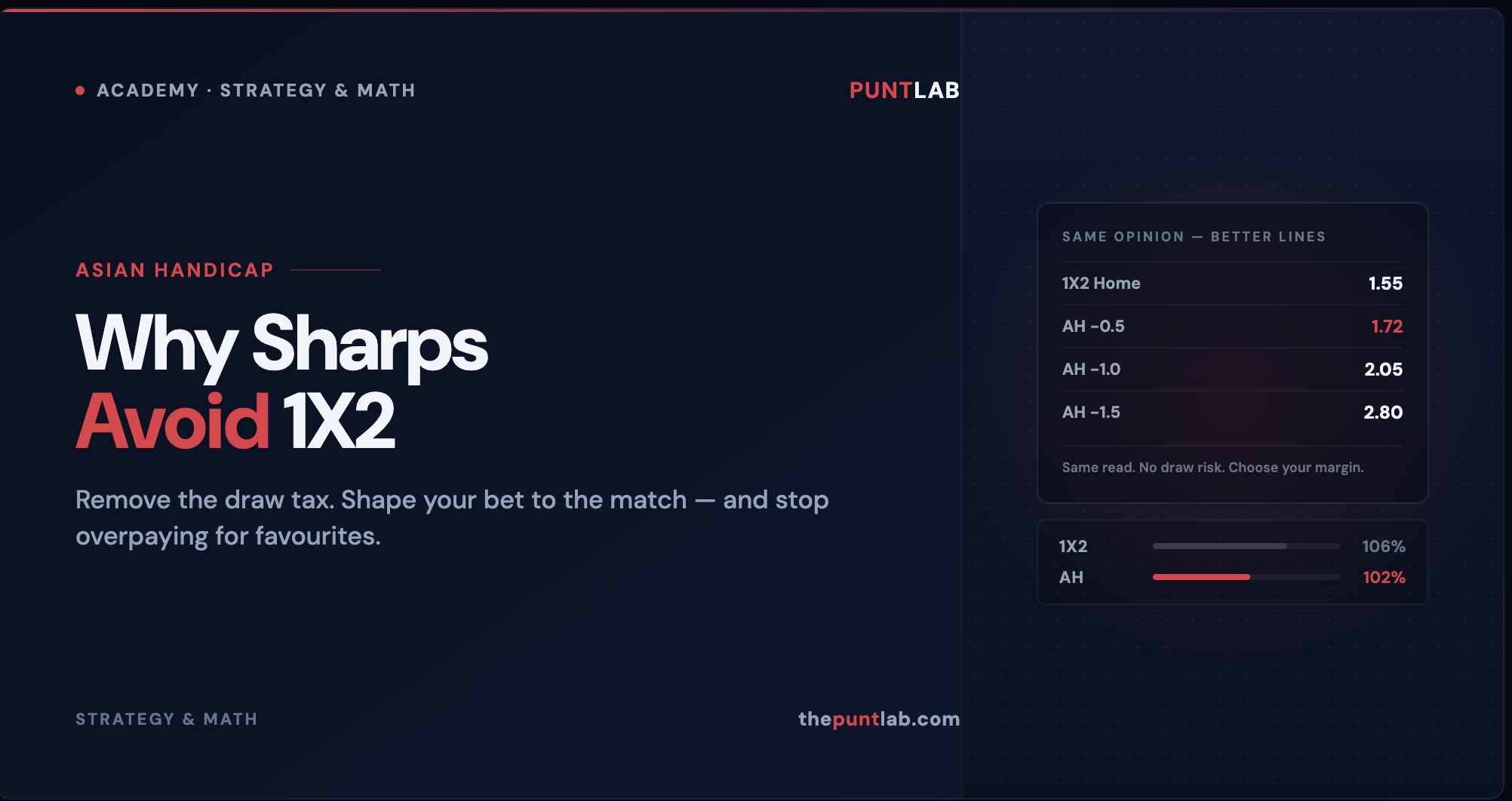
Example: you like a top team at home. In 1X2 they’re $1.55. That price often contains a hidden draw risk — the market expects them to win, but a draw still kills you.
Instead you might take:
- -0.5 if you want pure win exposure
- -1.0 if you expect dominance but want push protection
- -1.5 if you think the mismatch is real and you want a bigger payout
You’re not changing your opinion. You’re choosing the best expression of it.
This is also why Asian Handicap is so powerful in leagues where draws are common. If a competition has a high draw rate, 1X2 becomes a minefield. AH lets you sidestep the exact thing that ruins most multis: “best team… but not by enough.”
One more sharp point: Asian Handicap pairs beautifully with underlying data (xG, shot volume, territory). If your numbers say a team consistently creates more and concedes less, AH is often the more profitable way to back them because it forces you to think in margins, not vibes.
Next step: once you get comfortable, stop viewing handicaps as “riskier.” They’re often the opposite. They’re precision. You’re choosing the shape of the bet — and that’s what turns punting into strategy.
Now that you understand how Asian Handicap works, learn how to use xG to identify which teams deserve shorter prices — then combine both for sharper match reads. If you want to see how bookmaker margins compare across 1X2 and AH markets, check our guide to the vig. And for live odds across every round, the Football Data Hub tracks best prices from top bookmakers.